Reviewing Seamless Embroidery Stitch Quilt for Brand Merch
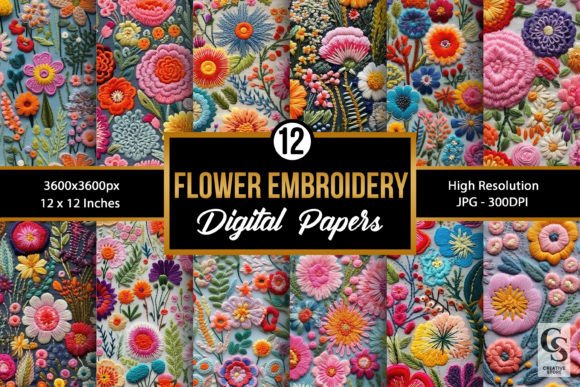
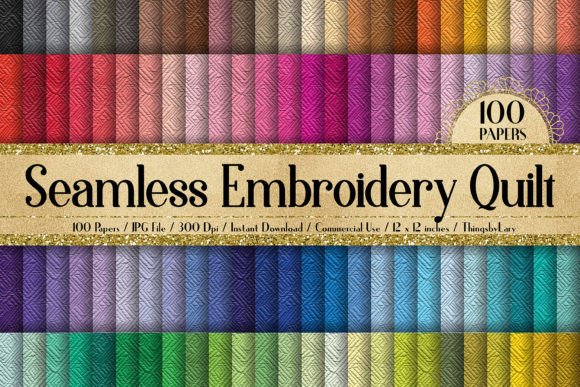
As an embroidery designer who has spent years translating brand identities into thread, I am always cautious about new design assets. We often see digital files that look stunning on a screen but fail miserably under the needle. Today, I am reviewing the Seamless Embroidery Stitch Quilt, a collection that promises to bring a tactile, handmade aesthetic to digital projects. This pack is available as one zip file, weighing in at 745 MB, and contains 100 JPG images of seamless embroidery stitch quilt pattern digital papers in 100 different colors. Each paper was created within 12 inches, offering a substantial canvas for creative adaptation.
For small business owners, Etsy sellers, and apparel decorators, the question is not just whether these Textures look good, but whether they can elevate your brand identity and survive the rigors of commercial production. Let us dive into how this resource performs in real-world scenarios.
First Impressions: A Handmade Aesthetic for Digital Use
The immediate impression of the Seamless Embroidery Stitch Quilt is one of warmth and authenticity. In a market saturated with sleek, vector-perfect graphics, there is a growing demand for designs that feel human. These patterns mimic the irregularity and charm of hand-stitched quilting, making them ideal for brands that want to project values of craftsmanship, care, and tradition. Whether your brand is rustic, playful, or elegantly classic, the variety of 100 colors ensures you can find a tone that matches your existing palette.
However, it is crucial to remember that these are Graphics in JPG format, not native machine embroidery design files like DST or PES. This distinction is vital for professional use. You cannot simply load these into your embroidery machine. Instead, they serve as powerful visual references, background textures for printable mockup presentations, or bases for creating custom embroidered patch designs through digitizing software.
Real-World Applications for Small Business Merch
Imagine you run a boutique coffee shop or a local florist. You want to create staff uniforms that stand out without looking corporate. Using the Seamless Embroidery Stitch Quilt as a reference, you can digitize a subtle chest accent that mimics a quilted stitch pattern. This adds depth to plain work shirts or apron embroidery, giving your team a polished, artisanal look that customers subconsciously associate with quality.
For Etsy sellers and crafters, these images are invaluable for creating small business merch listings. You can use the high-resolution JPGs to create realistic printable mockup scenes for your actual embroidered products. By overlaying your logo onto these quilted backgrounds, you provide potential buyers with a better sense of texture and finish, increasing buyer engagement and trust. Furthermore, if you offer custom apparel, these patterns can inspire unique sleeve details or back-panel designs that differentiate your offerings from generic print-on-demand services.
Consider the use case of a pet brand launching a new line of bandanas. The colorful variety in this pack allows you to match specific breed colors or seasonal themes. You can digitize simplified versions of these quilt patterns to create durable, washable designs that hold up well on cotton fabrics. This transforms a simple accessory into a premium handmade product that commands a higher price point.
Navigating Technical Challenges in Production
While the visual appeal is strong, using these patterns for actual commercial embroidery requires careful technical planning. Since these are image-based Textures, converting them into stitch files demands attention to stitch density. A dense quilt pattern can become stiff and bulky if not optimized correctly. For items like cap embroidery, where the fabric is curved and space is limited, heavy stitching can cause puckering. I recommend simplifying the design significantly for hats, focusing on outline stitches rather than fill patterns to maintain comfort and shape.
Similarly, for tote bag design or heavy canvas items, you must consider the fabric texture. The quilted look works beautifully on canvas, but you must ensure your stabilizer choice is robust enough to support the stitch count. Always test on a scrap piece of the actual material before running a full production batch. Dark uniforms present another challenge; ensure there is sufficient contrast between the thread colors and the garment. If the pattern relies on subtle shading, it may get lost on black or navy fabrics unless you use high-sheen threads like rayon or polyester.
Another critical factor is the hoop size. Since each paper was created within 12 inches, you have flexibility, but you must ensure your design fits within your machine’s maximum hoop capacity. For larger items like aprons or tote bags, you might need to split the design or use a multi-hoop technique, which requires precise alignment to maintain the seamless illusion of the quilt pattern.
Enhancing Brand Identity and Customer Trust
Consistency is key to building brand identity. The Seamless Embroidery Stitch Quilt offers a cohesive visual language that can be applied across various touchpoints. From the finished product itself to the packaging inserts and social media graphics, using a consistent stitched aesthetic reinforces your brand’s narrative of quality and attention to detail. When customers see this level of consistency, it builds trust. They perceive your business as professional and established, even if you are a solo entrepreneur working from home.
Moreover, these design elements can increase the perceived value of your goods. A plain t-shirt becomes a curated fashion item when paired with a thoughtfully placed, quilt-inspired embroidered patch. This elevation allows small businesses to compete with larger retailers by offering uniqueness and exclusivity that mass-produced items lack.
Practical Designer Notes for Implementation
Before you commit to using these assets in your next digital embroidery file project, follow these practical steps:
- Test in Black and White: Convert the JPG to grayscale first to check if the pattern holds its integrity without color reliance. This helps identify areas that may be too detailed or faint.
- Check Scalability: Zoom in to see how the pattern looks at small patch sizes. If the details blur, simplify the design for digitizing.
- Review Thread Color Contrast: Ensure your chosen thread colors stand out against the fabric. Use a color wheel to find complementary or high-contrast pairings.
- Inspect Spacing: Look for areas where stitches might overlap excessively or leave gaps. Adjust your digitizing settings to ensure even coverage.
- Confirm Hoop Size: Measure your design against your machine’s largest hoop to avoid resizing issues that distort the aspect ratio.
- Test on Real Fabric: Never skip the sample stitch-out. Check for puckering, thread breaks, or tension issues.
- Use Proper Stabilizer: Match the stabilizer weight to the fabric and stitch density. Cut-away stabilizers are often best for wearable items with dense fills.
- Create a Mockup: Use the original JPGs to create client approval mockups before digitizing, saving time and resources.
- Compare Assets: Place the design beside your other branding elements to ensure visual harmony.
- Confirm Licensing: Although this is a graphic pack, verify the commercial usage rights for any derived embroidered products to avoid legal issues.
In conclusion, the Seamless Embroidery Stitch Quilt is a versatile tool for designers who understand the bridge between digital art and physical thread. It is not a plug-and-play embroidery file, but rather a rich source of inspiration and texture that, when handled with technical expertise, can significantly enhance your small business merch and branded offerings. By respecting the technical limitations and leveraging the aesthetic strengths, you can create memorable, high-quality products that resonate with your audience.